



At a time when business models are changing almost daily, the biggest challenge for companies is no longer simply how to improve their processes, but how to build a culture that can keep pace with change.
This is particularly true in the pharmaceutical industry, where discipline, regulatory requirements and operational excellence are the foundations of how business is conducted. That is why any change that affects the way people are managed represents much more than an organisational initiative – it becomes a matter of strategic direction for the company.
Replek decided to focus precisely on this. Instead of treating flexibility as a benefit, it turned it into a tool for fostering responsibility, trust and modern leadership. Rather than allowing employee wellbeing to remain a collection of individual initiatives, the company created a platform that connects business performance with the employee experience and the organisation’s long-term sustainability.
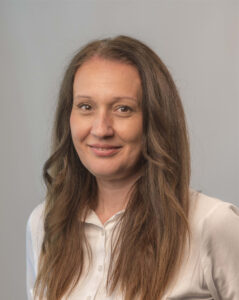
What does it mean to lead this kind of transformation in a company with more than eight decades of tradition? Why does the leadership of the future require less control and more trust? And how can an organisation be successful while genuinely putting people at the centre? Tanja Ivanova Gjorgjievska, Chief People Officer at Replek, shares her perspective..
Replek is a pharmaceutical manufacturing company in Macedonia that has introduced a hybrid working model. What was the moment like when you decided to move beyond the traditional boundaries of the manufacturing industry and say, “We can and want to do this, despite the industry’s rigidity”?
The key moment came when we realised that a company can develop only as fast as its culture develops.
Replek is a company with more than 80 years of tradition, whose success has been built on manufacturing excellence and clearly defined quality standards. As Chief People Officer at Replek, I believe more strongly than ever that a company’s success is determined not only by its technology, processes or products. That is why this decision sent a clear message: Replek respects its rich tradition, while at the same time building a culture that will support its next cycle of growth and development.
We did not start with the question, “Can a pharmaceutical manufacturing company introduce a hybrid working model?” We started with a much more important question: “What kind of organisation do we want to build for the future, and how do we want to attract, develop and retain the best people?”
We realised that employees’ expectations are changing and that a modern organisation must find a balance between business needs and people’s needs. For us, flexibility is not simply a question of where people work. It is about trust, responsibility and the way an organisation leads its people. Of course, pharmaceutical manufacturing has its own specific requirements, and some of our employees need to be physically present in the manufacturing process. But wherever the nature of the work allows for flexibility, we wanted to offer a different approach – one based on clearly defined goals, autonomy and responsibility.
For us, introducing the hybrid model was not simply a change in the way we work. It was a step towards a culture in which the focus shifts from control to trust, from presence to results, and from traditional management to modern leadership. As Chief People Officer, I now believe more strongly than ever that a company’s success is determined not only by its technology, processes or products. The organisations that succeed are those with people who can learn quickly, adapt to change and create new value. The role of leaders, therefore, is to create an environment in which people have trust, room to develop and the responsibility to actively participate in change. That is precisely why this decision sent a clear message: Replek respects its rich tradition, but is also ambitious about building the organisation of the future.
How did managers and team leaders react to the introduction of hybrid working and flexible working hours? Was there any fear of a decline in productivity, and how did you address it?
As with any significant organisational change, reactions varied. Some leaders immediately recognised the value of a more flexible way of working, while others naturally had questions and some concerns – primarily about how to maintain productivity, coordinate teams and manage performance when employees are not physically present. We felt that the most important thing was not to impose the change, but to actively involve leaders in the process and help them understand why we were making it.
The hybrid model is not simply a change in where people work; it is a change in how we lead. We discussed how effective management is no longer based on monitoring attendance, but on clearly defined expectations and goals, trust and accountability. Our leaders received ongoing support through communication, discussions and guidance on the new management approach. At the same time, we made it clear that flexibility is not a privilege without accountability. It goes hand in hand with trust, but also with responsibility towards the team, deadlines and business performance.
At the same time, this model has had a positive impact on employee wellbeing. Reduced day-to-day stress, a better work-life balance and greater autonomy have contributed to higher levels of satisfaction and engagement, as well as greater energy that employees bring to their work. For me, the biggest change was that we began building a culture in which a leader does not manage where people are, but rather focuses on how to enable them to make their best contribution. Because the future of leadership is not about greater control, but about creating an environment in which people take responsibility, learn quickly and achieve results together.
The project was implemented by a small HR team of just three people, while all 411 employees were included. What was the biggest operational challenge you faced when designing and implementing the REset platform?
The small People team established the framework and led the process, but the real success came through employee involvement and strong support from senior management. The biggest challenge was not implementing the activities for 411 employees. It was creating a change that would be embraced and become part of the organisation’s day-to-day operations.
From the very beginning, we knew that REset could not be just an HR project. It had to become part of the organisational culture. That is why we started by listening to our people – through surveys, open conversations and continuous feedback – to understand employees’ real needs and create solutions that made sense for different teams and different life circumstances. The small People team established the framework and led the process, but the real success came through employee involvement and strong support from senior management. For me, the greatest lesson from this project is simple: major transformations are not created by large teams, but by a clear vision, trust and the ability to align the entire organisation around a common goal.
REset showed that when people feel they are not merely recipients of change, but also its creators, change becomes sustainable.
REset was launched in March 2024 as an ongoing initiative. What is the next step for REset over the next 12 months? How do you plan to maintain this positive momentum among employees?
When we launched REset, we did not want to create yet another employee programme. Our ambition was much greater – to build an organisation where people can fully realise their professional potential while also receiving support during the most important moments in their lives.
We believe that the future of people management does not lie in viewing employees solely through the lens of their professional tasks and responsibilities. People come to work with their life experiences, family responsibilities, ambitions and challenges. Organisations that want to attract and retain the best talent over the long term must recognise people as a whole – their values, potential, needs and aspirations, rather than just their contribution in the workplace.
Through the REcare platform, we have introduced programmes that support employees during key life transitions. We introduced five days of paid leave for new fathers, supporting active parenting and a more equal distribution of family responsibilities. We have also developed a gradual return-to-work programme following maternity leave, which enables an easier transition, a more confident return to the workplace and continuity in career development. It is particularly important to us that parenthood, especially for women, should never be an obstacle to professional development. We believe that employees should not feel pressured to choose between a successful career and a fulfilling family life. The role of a modern company is not to ask people to make that choice, but to create conditions in which they can have both. At the same time, through the REstrong platform, we have developed a dedicated programme to support single parents and caregivers.
It includes more flexible working arrangements, psychological support, mentoring, additional days off and targeted assistance at times when it is most needed. In this way, we are further strengthening the culture of equal opportunities and ensuring that people’s life circumstances do not become an obstacle to their personal and professional development. For me, this is the next stage in the development of employee wellbeing. Today, we are no longer talking simply about benefits, but about a culture in which people feel that the company sees, understands and supports them. When employees do not have to choose between their careers and their personal lives, we do not simply get more satisfied employees – we get people who are more engaged, more loyal and more willing to build the company’s future together.
That is why, for us, REset is not simply an employee wellbeing initiative. It is a strategic investment in people, organisational culture and the sustainable growth of Replek.
This year, Replek won second place for Best Regional HR Practice in the category of companies with up to 1,000 employees at the 14th edition of the HR Days conference, held from 21 to 23 April in Rovinj, Croatia.